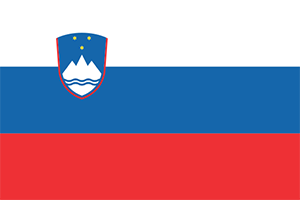
General information - Slovenia
Slovenia is a Central European country with a population of 2.032.362 (December 2008). At the end of 2008, 34% of the population was aged between 0 and 29 years. At the beginning of the 2008/09 school year, there were 163 457 pupils in schools providing compulsory education, including pupils with special needs in adapted education programmes.
The state-wide official language of instruction is Slovenian. In the Hungarian-speaking area, bilingual instruction in Hungarian and Slovenian is compulsory. The Italian-speaking area hosts Italian secondary schools, where Slovenian is a compulsory subject, and Slovenian secondary schools, where Italian is a compulsory subject. There are also international schools (English and French).
The present Constitution of the Republic of Slovenia was adopted on 23 December 1991, following the results of the plebiscite on the sovereignty and independence of Slovenia on 23 December 1990, when Slovenes overwhelmingly voted for independence.
Under the Constitution, Slovenia is a democratic republic and a social state governed by law. The state’s authority is based on the principle of the separation of legislative, executive, and judicial powers, with a parliamentary system of government. Power is held by the people and they exercise this power directly (through referendums and popular initiatives) and through elections. The highest legislative authority is the National Assembly (90 deputies), which has the right to enact laws. The Constitution also contains special rights for the Hungarian, Italian, and Roma ethnic communities.
On 1 January 2007, Slovenia became the first new EU member to adopt the euro, after the European Commission and the European Central Bank made favourable assessments of Slovenia’s readiness for the introduction of the common European currency and following a recommendation for Slovenia’s inclusion in the EMU.
Last modified Jan 29, 2010