

Country information for Finland - Legislation and policy
The Finnish Parliament enacts laws on education and decides on the general principles of education policy. The government and the Ministry of Education and Culture implement these principles at the central government level. The Ministry of Education and Culture is in charge of the administration of education, research, culture, youth issues and sports. Under the Universities Act, which Parliament passed in June 2009, Finnish universities are independent corporations under public law or foundations under private law. The Ministry of Education and Culture supervises publicly subsided education and training provision, from early childhood education and care (ECEC), primary, secondary, upper-secondary general education and vocational education and training, to polytechnic, university and adult education.
In ECEC, pre-primary, comprehensive and upper-secondary education, vocational institutions and adult education, the Ministry is assisted by the Finnish National Agency for Education. The Development Plan for Education and Research is approved by the government every four years. It covers the year of its approval and the next five calendar years.
Historical overview
Within the parallel school system, prior to the introduction of the uniform comprehensive school system, there were four periods in the development of special education in Finnish primary schools. The first period covers the establishment of special education, from the 1840s to 1921, when the Compulsory Education Act came into force. Initially, special education focused on instruction for learners with sensory disabilities. The first schools for people with hearing impairments, visual impairments and motor impairments were established in the 1840s, the 1860s and the 1890s, respectively. When folk education became the obligation of local authorities in 1866 and when it subsequently became compulsory, many children with disabilities were excluded from school. Education for people with disabilities was provided in the form of philanthropic activities by individuals and charitable organisations.
The second period runs from 1921, when the Compulsory Education Act came into force, until the end of the Second World War. The Compulsory Education Act stated that the children of Finnish citizens were subject to compulsory education, except for children with intellectual disabilities, who were exempt from compulsory education.
The third period starts at the end of the Second World War and runs through to the unification of education and the launch of comprehensive schools in 1972. In the post-war period, care for people with disabilities developed. In addition to medical care and rehabilitation, vocational rehabilitation also developed. There was a quantitative increase in special education and specialisation in its different sectors between the 1940s and the 1960s. New forms of education emerged alongside adjusted instruction, such as instruction for pupils with behavioural and emotional disorders and part-time special education for pupils with mild learning or adjustment difficulties.
However, the medical approach prevailed in the provision of education for learners with special needs. Deviation was, above all, considered from the perspective of physical and functional disability. Learners with special needs were seen as being different from other learners to such an extent that their education could not be organised in conjunction with mainstream education. In addition, the special needs of different groups were so varied that, in order to meet their needs, these learners were segregated into groups that were as homogeneous as possible in terms of instruction. As this way of thinking was prevalent at that time, special education remained highly differentiated and segregated.
From the early 1970s, the principle of normalisation and the philosophy of integration were at the forefront in educating learners who needed special support. The principle of normalisation aimed to make the lives of people with disabilities as normal as possible. Integration was considered the means to implement this normalisation. The objective was social integration; in other words, the opportunity for learners with special needs to participate in mainstream instruction in the school they would attend if they did not have a disability.
Integration has been promoted in basic education since the 1970s. The Comprehensive Schools Act, passed in 1983, enabled a better starting point to develop the integration process. According to the Act, learners could no longer be exempt from completing compulsory education. The comprehensive school national core curriculum, issued in 1985, raised the issues of differentiation and, where necessary, the provision of special education and the individualisation of education and the syllabus. In terms of promoting integration, it was important that education and the syllabus were individualised to enable special education curricula to be used in conjunction with mainstream education.
Education for learners with minor intellectual disabilities began in primary schools in the form of special school instruction. In 1985, integrated instruction for learners with moderate and severe intellectual disabilities transferred from social administration to educational administration. From 1 August 1997, comprehensive schools became responsible for the instruction of learners with severe intellectual disabilities, which had previously fallen under social administration. Similarly, comprehensive schools took over the instruction provided by reform schools from 1 August 1998.
The fourth period of special education started in the 1990s. In 1995, there was a national evaluation of the status of special education. The conclusions of the evaluation formed the basis for national development measures implemented in subsequent years. The aim was to reform the operating culture, organisation of education and joint steering by supporting regional and municipal integration of service systems.
The comprehensive reform of school legislation in 1998 and the resulting Basic Education Act (628/1998) aimed to guarantee educational equality and equal educational services for all those in compulsory education. The old legislation based on institution forms was replaced by more concise and centralised legislation based on the objectives and contents of education, levels and forms of education and the rights and responsibilities of learners.
On 14 March 2006, the Ministry of Education and Culture appointed a steering group to prepare a proposal for a long-term strategy for the development of special needs education in pre-primary and basic education. The steering group proposed that the current practice be changed to focus on earlier support and prevention. General and intensified support were adopted as the primary forms of support before a decision on special support is made. The intensified support bolsters learning and growth and prevents the aggravation and escalation of problems related to learning, social interaction or development. The changes to the Basic Education Act came into force on 1 January 2011, but the provisions on pupil welfare and data protection were applied from 1 August 2010.
The Finnish National Agency for Education revised the National Core Curriculum for Pre‑Primary and Basic Education according to the new provisions, and they were also adopted on 1 January 2011. The amendment adds provisions on pre-primary and basic education and support given to pupils. It aims to strengthen learners’ rights to early, preventive support in learning and growth and special support, if needed. The support intensifies by stages: general support, intensified support and special support. Provisions on the processing and confidentiality of personal data and learner welfare services were also amended and supplemented.
A learner has the right to receive instruction and guidance in accordance with the curriculum and sufficient support in learning and school attendance, as soon as the need arises (amended Section 30). On every school day, every learner has the right to receive support and counselling. The support is a collaborative effort involving all teachers, the learner and their parents and, where needed, learner welfare personnel. Special needs education is provided, taking into consideration the learner’s interests and the facilities for providing education, in conjunction with other instruction, or partly or totally in a special needs classroom or another appropriate facility.
Early Childhood Education and Care
The first folk kindergarten in Finland was established in 1888 and ECEC teacher education started in 1892. In 1920 there were already 80 kindergarten provisions. The main principles of kindergarten were to offer care and education for children and assistance for poor families and to keep the children of factory workers away from streets.
In 1996, access to ECEC became a universal right for every child under school age. Parents or guardians decide whether their child participates in ECEC. The central principles and overall objectives of ECEC are outlined in legislation.
The Act on Children’s Day Care originally dates from the early 1970s, but it has recently been revised (2018) and renamed as the Act on ECEC. It came into force on 1 September 2018. It mainly concerns 0–5-year-old children. According to this Act, ECEC aims to promote the holistic growth, development, health and well-being of every child. The Act defines three different forms of early childhood education:
- ECEC centres (kindergartens);
- family day care (usually by one childminder with four children);
- other ECEC activities (such as playground activities and weekly clubs).
In August 2017, the National Core Curriculum for Early Childhood Education and Care (2016) became mandatory for municipalities and private providers. The Finnish National Agency for Education updated the National Core Curriculum for ECEC in December 2018. It provides guidelines for organising support for a child’s development and learning, which is part of high-quality ECEC activities. Each child in need of support is entitled to receive it. The child’s need for support should be recognised and appropriate support arranged as the need arises, with cross-sectoral co‑operation if necessary. Sufficiently early and correctly targeted support may promote the child’s development, learning and well-being. At the same time, support may be used to prevent problems from emerging. ECEC is developed in accordance with the principles of inclusion in Finland.
The core curriculum is now a national norm, whereas in 2003 and 2005 it was only a recommendation. Providers draw up their local curricula based on the core curriculum. Local curricula require ECEC personnel in ECEC centres, family day care and other types of ECEC to follow the underlying values, objectives and contents of the Act on Early Childhood Education and Care and the core curriculum.
The general principle of ECEC in Finland is that the best interests of the child are the primary consideration. The child has a right to well-being, care and protection, and the child’s opinion is considered in decision-making. Equal and equitable treatment of all children and protection against discrimination are requirements, in accordance with the United Nations (UN) Convention on the Rights of the Child, the Act on Early Childhood Education and Care and the UN Convention on the Rights of Persons with Disabilities.
Quality ECEC is the right of every child in Finland. Recent research has shown that ECEC has favourable effects on both the child and society. Not all ECEC, however, provides the desired results; it must be high quality. Sensitive interaction, taking into account the child’s interests, building learning environments together with children, responsible care, and enabling play and learning are central aspects in the implementation of effective ECEC. Each child’s day includes a lot of play and everyday activities such as trekking, eating and outdoor activities, all of which include pedagogically-planned learning targets for the children.
Mainstream pre-primary and basic education
According to the Constitution of Finland, everyone is equal before the law. No-one may, without a valid reason, be treated differently from other people on grounds of sex, age, origin, health, disability or any other reason that concerns their person. Children are to be treated equally and as individuals. They should have a say on issues that affect them to a degree corresponding to their level of development. Everyone also has the right to free basic education. Everyone is guaranteed an equal opportunity to receive education in accordance with their abilities and special needs and to develop themselves without being prevented by economic hardship.
The Constitution ensures that the educational support services are available to everyone, allowing them to obtain the security and essential subsistence and care required for a life lived with dignity. The public authorities must guarantee everyone adequate social, health and medical services and promote the health of the population. In addition, public authorities must support families and others responsible for children, to ensure children’s well-being and personal development.
The Finnish basic education system has been based on the philosophy of inclusion for a long time. Basic education is the same for all. There is no streaming, but children are supported individually so that they can successfully complete their basic education.
According to the Basic Education Act (628/1998), all education must comply with the national core curriculum. Instruction must be organised to meet learners’ age level and abilities, so as to promote their healthy growth and development. Instruction should be conducted in co-operation with pupils’ families.
The National Core Curriculum for Basic Education is the national framework and is used as the basis for drawing up local curricula. Education providers are responsible for preparing and developing local curricula. Municipalities are responsible for providing early childhood education and care, pre-primary education and basic education to all children residing in the area.
The National Core Curriculum for Pre-Primary and Basic Education was renewed and completed in 2014. The process involved all stakeholders, particularly education providers and personnel. The aim was to encourage parents and pupils to also participate in the process. New local curricula based on this core curriculum were implemented in schools from August 2016. Core ideas include:
- Active learner position
- Sustainable way of living
- Integrative teaching
- Comprehensive education
- Schools as learning communities (Source: Raising the Achievement of All Learners in Inclusive Education – Finland Country Report).
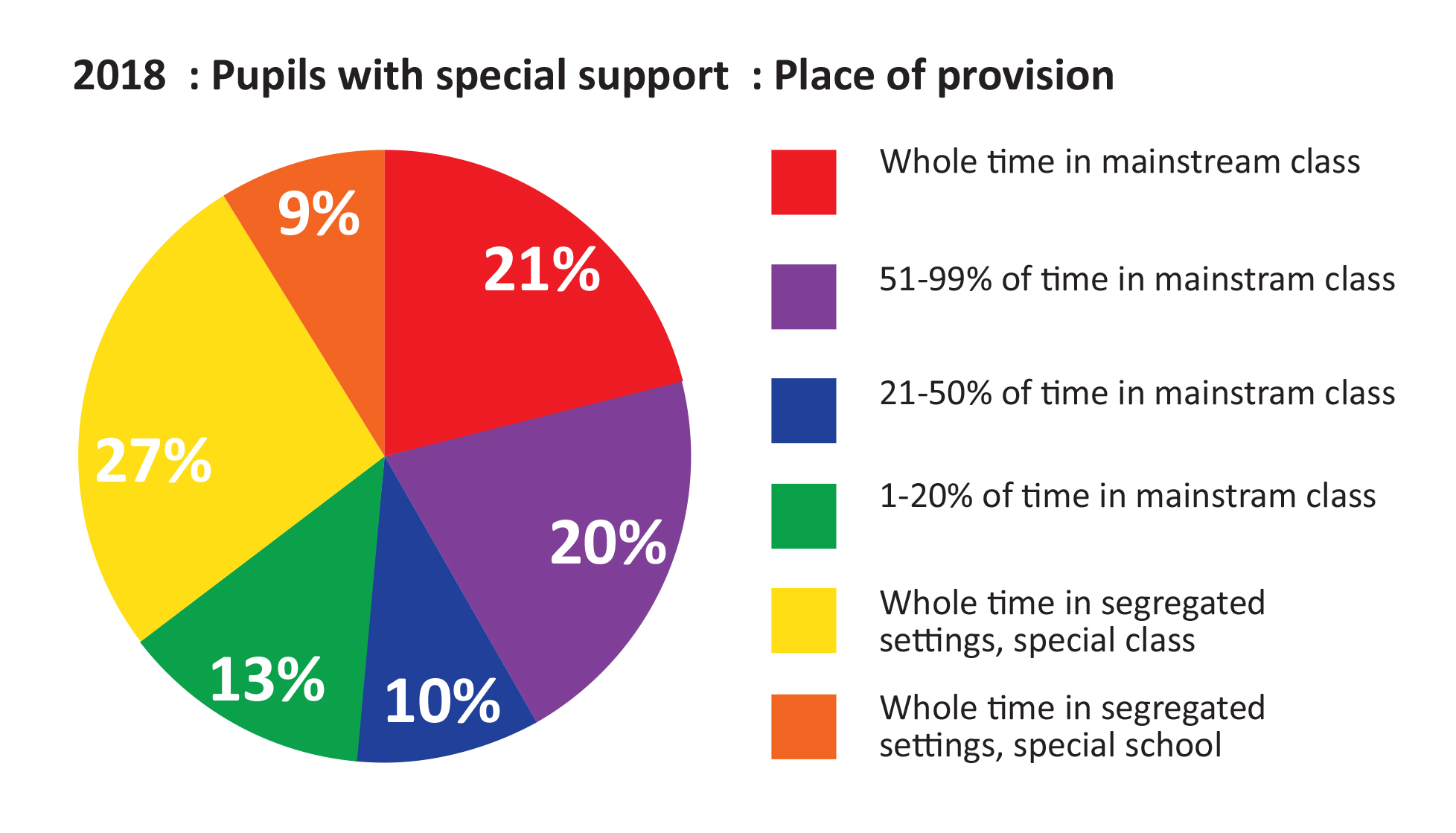
Amendments to the National Core Curriculum for Pre-Primary and Basic Education focus on providing support as early as possible to prevent problems emerging and developing. Support for growth, learning and school attendance falls into three categories: general support, intensified support and special support. Everyone is entitled to general support. It is a natural part of the everyday teaching and learning process. Intensified and special supports are based on careful assessment and long-term planning in multi-professional teams, and on individual education plans (IEPs) for learners.
If general support is not enough, the education provider carries out a pedagogical assessment and prepares a learning plan for intensified support.
If intensified support is not enough, the learner undergoes further, more extensive pedagogical statements. The education provider collects information from teachers and other professionals. Based on this information, the education provider makes an official decision concerning special support. Following this decision, an IEP is drawn up for the learner.
As part of the reform, a development project on intensified and special support began in 2008. The objective was to implement the strategy (2007) for the development of pre‑primary and basic education. The Finnish National Board of Education was responsible for the project. Helsinki University Centre for Educational Assessment carried out a developmental assessment of the project and Jyväskylä Continuing Professional Development Centre, EduCluster Finland, organised national training. The development project was completed in 2012.
Pupil welfare in pre-primary and basic education
Pupils are entitled to free pupil welfare as necessary for their participation in education (Section 9(4) of the Pupil and Student Welfare Act: 1287/2013). Pupil welfare means promoting and maintaining each pupil’s good learning, psychological and physical health and social well-being, as well as activities that improve the pre‑conditions for these in the school community.
The guiding principles of pupil welfare work are confidentiality, a respectful attitude towards pupils and guardians, and promoting their participation. It comprises pupil welfare in accordance with the curriculum approved by the education provider and pupil welfare services, which include school health services, as referred to in the Pupil and Student Welfare Act. Pupil welfare primarily consists of preventive activities and communal pupil welfare work that supports the entire school community. Pupils also have a statutory right to individual pupil welfare (Sections 3(1) and (2) of the Pupil and Student Welfare Act).
Cross-sectoral co‑operation is essential in pupil welfare. The education, social welfare and health administration sectors organise pupil welfare in co‑operation, ensuring that it forms an effective and coherent whole. Pupil welfare is implemented in co‑operation with pupils and their guardians, taking into account the pupils’ age and capabilities. Where necessary, other partners are invited to participate.
The objectives, tasks and implementation principles of pupil welfare form a continuum that extends from pre-primary education to secondary education and training. Interaction between different levels of education is important for the functioning of the pupil welfare system as a whole.
The education provider appoints a steering group for pupil welfare and school welfare groups for individual schools. Questions concerning an individual pupil are discussed by an expert group that is put together as required in each case. Each group has its own tasks and a composition based on these. All pupil welfare groups are cross-sectoral; in addition to teaching staff, the groups include representatives from school health care, psychologist and social worker services as required in each case.
Individual pupil welfare means that a pupil is given access to school health care services, services of a school psychologist and a school social worker (Section 5(1) of the Pupil and Student Welfare Act). Extensive health examinations are carried out by school health care services, as well as other regular examinations, as part of individual pupil welfare.
Individual pupil welfare aims to monitor and promote the pupil’s holistic development, health, well-being and learning. Safeguarding the provision of early support and preventing problems are also vital. The pupils’ individual capabilities, resources and needs are taken into account, both when putting together the support offered by pupil welfare and in the everyday life of the school.
Individual pupil welfare is always based on the consent of the pupil and, if necessary, their guardian.
Support in special circumstances
Learners may need support in special circumstances, such as in connection with an illness or difficult life circumstances. In such cases, instruction may be provided in hospitals and community homes. The hospital’s local authority is responsible for arranging teaching for learners who are patients, as far as their health or other circumstances allow. Instruction for learners in community homes is the responsibility of the school operating in the community home, provided that the community home is authorised to provide education. Responsibility for instruction for other learners placed outside home rests within each learner’s municipality of residence
Vocational education
Vocational special needs education is designed for students who need special support in learning and studying regularly or on a long-term basis due to learning difficulties, disabilities, illness or other reason. Special needs education refers to systematic pedagogic support that is based on the students’ personal objectives and skills, as well as special arrangements for teaching and studying.
Special needs education aims to enable students to meet the vocational skills requirements and learning objectives for the qualification or the education. However, in special needs education exceptions can be made to the qualification requirements. For example, the vocational skills requirements, learning objectives and skills assessment can be adjusted as deemed necessary for the students’ personal objectives and skills.
A personal competence development plan is drawn up for each student. The plan includes information on any necessary supportive measures. The support received by a student may involve special teaching and studying arrangements due to learning difficulties, injury or illness, or studies that support their study abilities.
In addition to vocational qualifications, students can complete training preparing them for vocational education and training (VET). This education and training prepares students to apply for VET qualifications and fosters their preconditions for completing qualifications. Preparatory education and training for work and independent living is available for those who need special support due to illness or injury. It provides students with instruction and guidance according to their personal goals and capabilities.
Upper-secondary education
The National Core Curriculum for General Upper-Secondary Schools (2019) will come into force in autumn 2021.
Under the General Upper-Secondary Schools Act (714/2018), learners who are struggling with their studies because of special linguistic difficulties or other learning difficulties are entitled to receive special needs education and other support for learning as required by their individual needs (Section 28(1) of the General Upper-Secondary Schools Act: 714/2018). Special needs education and other support for learning enable the equal treatment of learners. Accessibility of learning and prevention and early recognition of learning difficulties play a key role. The objective of support is to help learners complete their upper-secondary studies and to promote their well-being and coping. The support also aims to provide the learners with capabilities for further studies.
Learners have a right to receive support regardless of the reason for the learning difficulties. The learning difficulties may be caused by difficulty with reading and writing, mathematics or attention, an illness, a disability or a life situation.
Section 28(2) of the General Upper-Secondary Schools Act states that the need for support should be assessed at the beginning of the studies and regularly as the studies progress. Teachers assess the need for support together with learners and, if necessary, their guardians. Subject to the learners’ consent, experts necessary for the organisation of the support may also participate in the assessment.
The planning and implementation of support measures should begin as early as possible. The learners’ teachers plan the support measures together with the learner. Under Section 28(1) of the General Upper-Secondary Schools Act, the teaching staff implement the support measures in co-operation. Positive and encouraging feedback develops the learners’ perception of themselves as learners. It also reinforces the learners’ self‑assessment skills and ability to plan for the future. The teachers help the learners to acquire learning-to-learn skills, take responsibility for their learning, and use the specific learning strategies for each subject.
More information about the Finnish education system is available on the Eurydice website.
Last updated 24/03/2020